
Facade contractors operating across the UK face a recurring question:
How do you maintain consistent
installation quality when your projects are hundreds of miles apart?
The obvious answer might be to find a
local installation team for every project.
It sounds efficient.
A small local team arrives with a van,
installs the system, finishes its section and moves on to the next job.
For a single project, particularly one
with straightforward access and a short programme, this can appear commercially
attractive.
But what happens when you have five
projects in different regions?
What happens when two projects
suddenly accelerate at the same time?
What happens when your best installers
are already committed elsewhere?
And what happens during the summer,
when half the industry seems to be trying to resource additional labour
simultaneously?
This is where the difference between a
centralised project-by-project installation model and a decentralised
specialist installation model becomes much more interesting.

The "Man and a Van" Model
Let's start with a model that is
familiar across construction.
A contractor wins a project in
Manchester.
They find a Manchester-based team.
Another project starts in Bristol.
They find another team.
Then a project appears in London.
Another team is sourced.
On paper, this makes sense.
There is less travel, potentially
lower accommodation costs and a local workforce already familiar with the area.
But there is an important question:
Who is controlling the installation
standard?
If every project operates through a
different group of installers, consistency can become dependent on individual
experience and supervision rather than the installation company itself.
One team may be exceptionally good.
Another may be average.
A third may be excellent at one facade
system but unfamiliar with another.
The contractor may effectively be
buying labour capacity rather than a repeatable installation process.

The Decentralised Specialist Model
A decentralised installation company
approaches the problem differently.
The physical workforce is distributed.
The management system is not.
This distinction is fundamental.
A specialist subcontractor can have
teams operating in different parts of the UK while maintaining a central
approach to:
- workforce planning;
- training and competency;
- RAMS and SSOW;
- quality control;
- site supervision;
- logistics;
- communication;
- reporting;
- equipment management;
- programme monitoring.
This is close to the operating model
On Facades has developed over more than a decade: a London-based specialist facade
installation business capable of deploying self-managed teams across
commercial, civil and Network Rail projects.
The objective isn't to make every
project identical.
It is to make the way the project
is managed and controlled consistent.
Consistency Doesn't Come From Geography
A common misconception is that the
best way to achieve consistent workmanship is to keep the same people working
in the same geographical area.
There is some logic to this.
But consistency is ultimately created
through process, competence and accountability.
A good installation framework should
allow a team moving from London to Manchester, Bristol, Birmingham or Newcastle
to understand:
This is how we plan.
This is how we communicate.
This is how we check our work.
This is how we record it.
This is how we deal with problems.
This is the standard expected from us.
The location changes.
The operating principles don't.
The Hidden Advantage: Workforce Mobility
One of the strongest advantages of a
decentralised model becomes apparent when project demand isn't evenly
distributed geographically.
Imagine a contractor has:
- Project A in London requiring 8
installers;
- Project B in Birmingham requiring 6;
- Project C in Manchester requiring 10;
- Project D in Bristol requiring 5.
A rigid regional labour model may
require four separate labour pools.
A mobile specialist subcontractor can
potentially redistribute its workforce according to programme requirements.
If Birmingham accelerates, resources
can move there.
If London is delayed, the workforce
doesn't necessarily need to sit idle.
If Manchester requires additional
labour for three weeks, an existing team can potentially support it.
This creates something increasingly
valuable in construction:
Resource elasticity.

The Summer Holiday Problem
There is another reality that doesn't
always appear in the programme.
People go on holiday.
And rightly so.
But projects don't stop because August
arrives.
A centralised workforce can create a
serious problem when several key operatives are unavailable simultaneously.
A decentralised organisation has a
larger internal pool from which to rebalance resources.
Instead of asking:
"Where can we find another six
installers?"
the question becomes:
"Which team can we temporarily
redistribute?"
That is a fundamentally different
operational position.
Remote Projects Become More Viable
A project in an area with limited facade
installation labour can be commercially unattractive to a contractor relying
entirely on local resources.
A decentralised specialist
subcontractor can make that project more achievable.
The team may travel.
Accommodation may be required.
Logistics become more complicated.
But these costs can be planned and
priced.
The greater advantage is that the
contractor doesn't automatically have to reject a project simply because there
isn't a sufficiently skilled local labour pool.
This becomes particularly relevant for
specialist facade systems where the available workforce is already limited.
But Doesn't Decentralisation Increase
Cost?
Sometimes, yes.
Travel, accommodation and mobilisation
aren't free.
A local team may appear cheaper when
comparing a daily labour rate.
But daily labour rate is not the
same as installation cost.
The real calculation should include:
Labour + supervision + materials
distribution + quality failures + management time + mobilisation + programme
disruption + logistics + delays.
A slightly more expensive installation
team that completes the work correctly and maintains the programme can be
significantly cheaper than a low-cost team that creates rework or requires
constant supervision.
The cheapest labour rate can therefore
become the most expensive installation solution.
The On Facades Approach
Our model has developed around
precisely this challenge.
We are a specialist labour-only
installation subcontractor, rather than a material supplier or facade
manufacturer. Our focus is therefore on the execution side of the building
envelope: putting competent people, appropriate supervision, planning and
operational control around the installation.
Our management structure supports
projects through:
Project assessment
Planning, installation sequencing,
SSOW development, risk management and contingency planning.
Site management
Supervision, H&S compliance,
workflow coordination, quality control and stakeholder communication.
Operational management
Equipment, logistics, communication
and lean installation practices.
Workforce management
Resource planning, competency,
training and certification.
These aren't separate services
operating independently.
They are components of the same
delivery system.

The Central Office Doesn't Need to Control Everything
This is perhaps the most important
point.
A decentralised organisation doesn't
work because head office tells everyone what to do.
It works because site teams are
trusted to make decisions within a clearly defined framework.
A supervisor in Manchester shouldn't
have to wait for London to tell him how to solve every minor site problem.
At the same time, London needs
sufficient visibility to understand:
- productivity;
- labour allocation;
- programme;
- quality;
- safety;
- material requirements;
- emerging risks.
This is where communication technology
and structured management become important.
On Facades' operational approach
incorporates project-management systems and real-time workforce monitoring
alongside traditional site management.
Technology doesn't replace the
supervisor.
It gives management better visibility
of what the supervisor is dealing with.
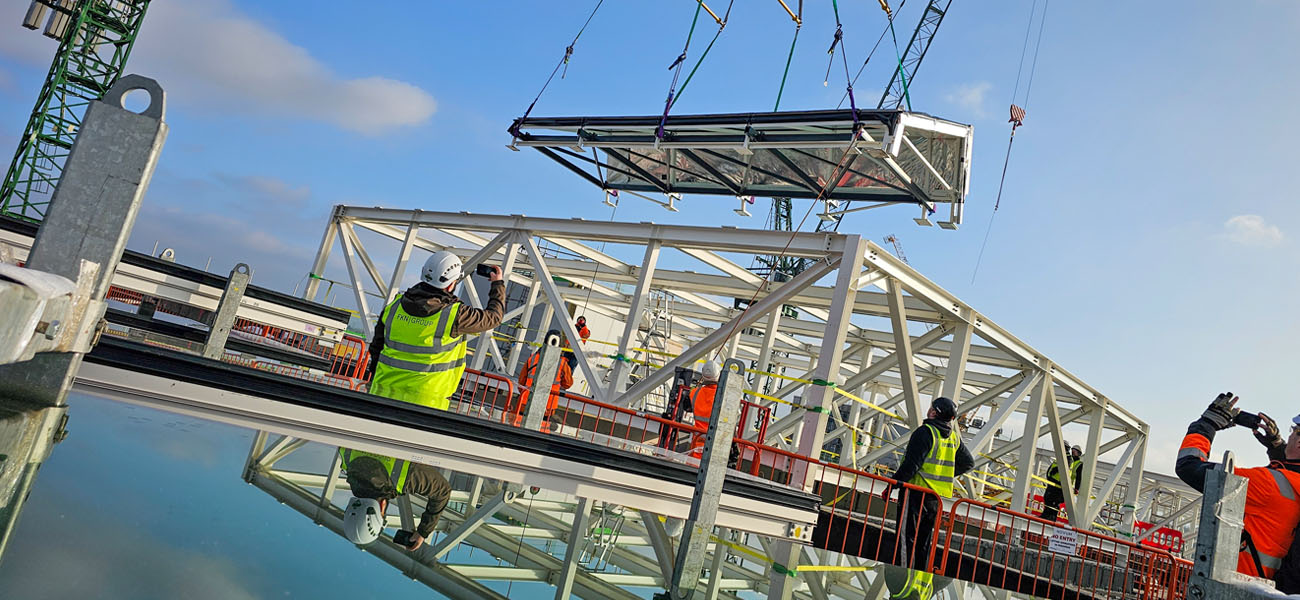
What About Quality?
This is ultimately the question that
matters most to a facade contractor.
How do you know the same standard is
being achieved in London and Leeds?
The answer cannot simply be:
"Because we told the installers
to do a good job."
Quality needs a system.
That means:
- competent installers;
- appropriate supervision;
- clear installation methodology;
- inspection and test procedures;
- first-off checks;
- photographic records;
- QA sign-offs;
- continuous monitoring;
- lessons learned;
- feedback into future projects.
On Facades specifically identifies
quality control, continuous monitoring, feedback and improvement as elements of
its management and operational services.
This is where a decentralised
workforce can actually become an advantage rather than a weakness.
Each project generates experience.
That experience can be fed back into
the central organisation.
The lesson learned in Bristol can
improve the next project in Manchester.
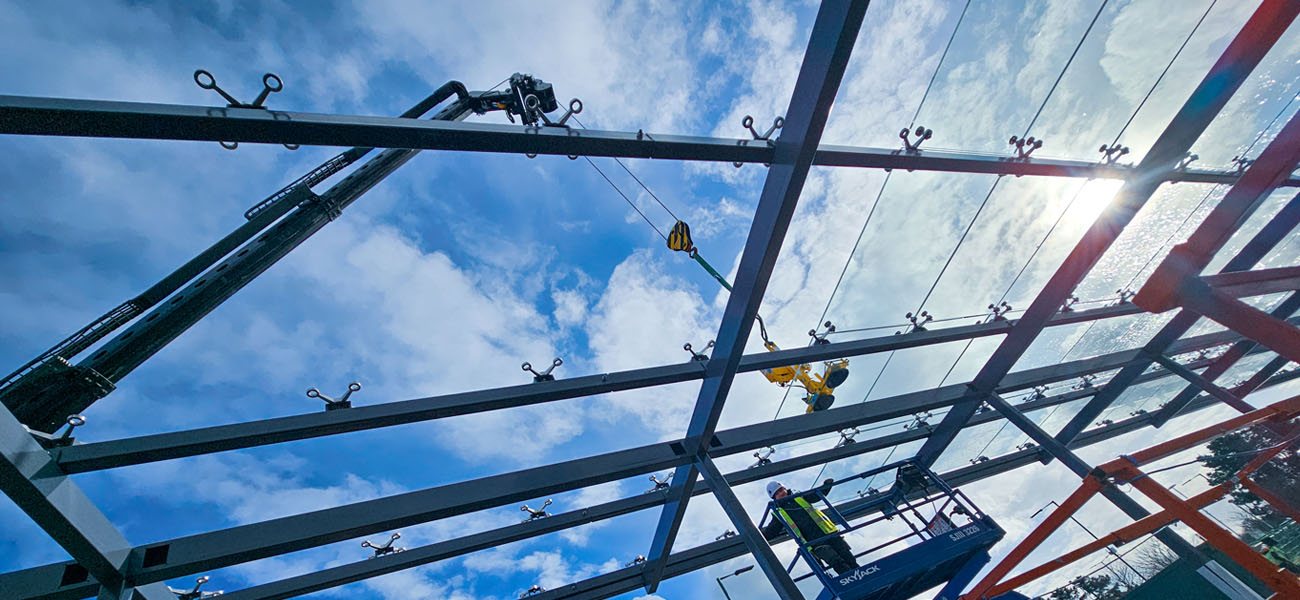
Centralised Management. Decentralised Execution.
Perhaps the best way of describing the model is:
Centralise the standards. Decentralise the execution.
Keep the following centrally controlled:
Standards → Training → Competence → QA → H&S → Processes →
Data → Lessons learned
Allow the following to remain flexible:
People → Location → Team composition → Logistics → Programme
response → Local project requirements
This gives the organisation both control
and agility.
And in today's construction
environment, both are increasingly important.
So Which Model Is Better?
There isn't one answer for every
project.
A small, repetitive local project may
be perfectly suited to a local installation team.
A major, technically complex project
may require a dedicated specialist subcontractor.
A contractor with a very large
permanent workforce may prefer direct employment.
The important question isn't:
"Which model is cheapest?"
It is:
"Which model gives us the best
combination of quality, productivity, flexibility, accountability and programme
certainty?"
That is a much harder question- and a
much better one.
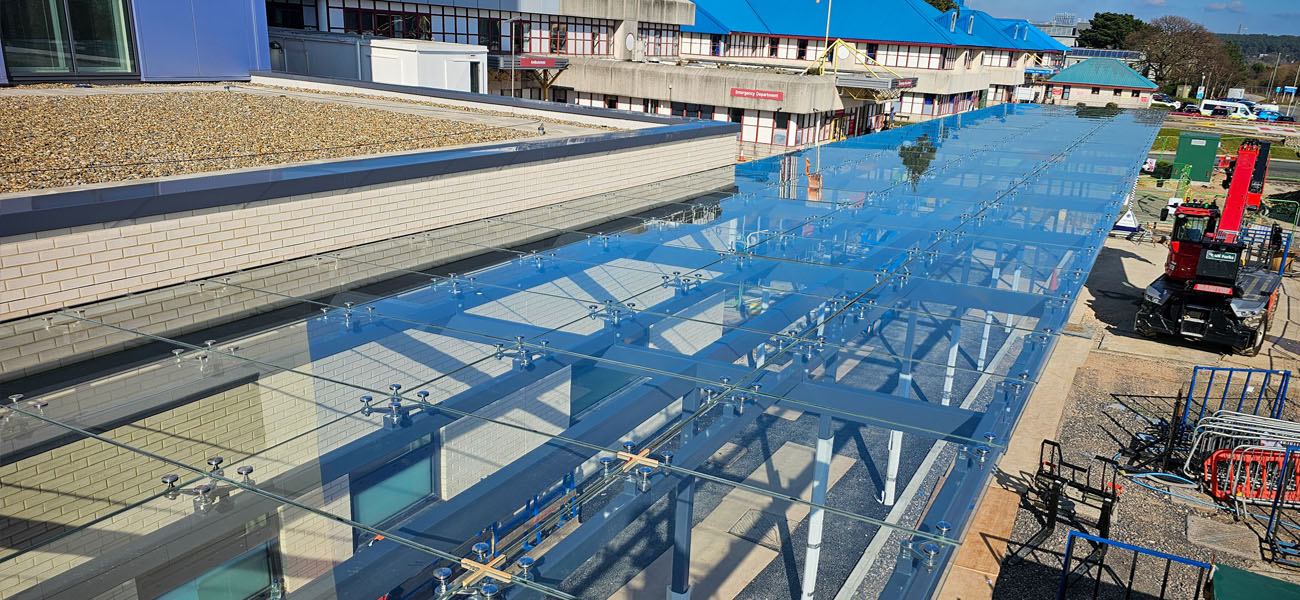
Our View
After years of working across
different regions, systems and project environments, we've come to appreciate
the value of having people who can move rather than projects that have to
fit the available people.
Our London base is our operational
centre.
Our workforce doesn't have to be.
That allows us to take on projects
where local skilled labour may be limited, redistribute resources when
programmes change and maintain continuity when one project slows down while
another accelerates.
Most importantly, it allows us to
develop a consistent installation culture across different locations.
We don't expect every project to be
easy.
We expect our organisation to be
capable of adapting when it isn't.
And perhaps that's the real benefit of
decentralisation:
Not having the same people everywhere.
Having the same standards everywhere.
At On Facades, that's the model we're
continuing to build.
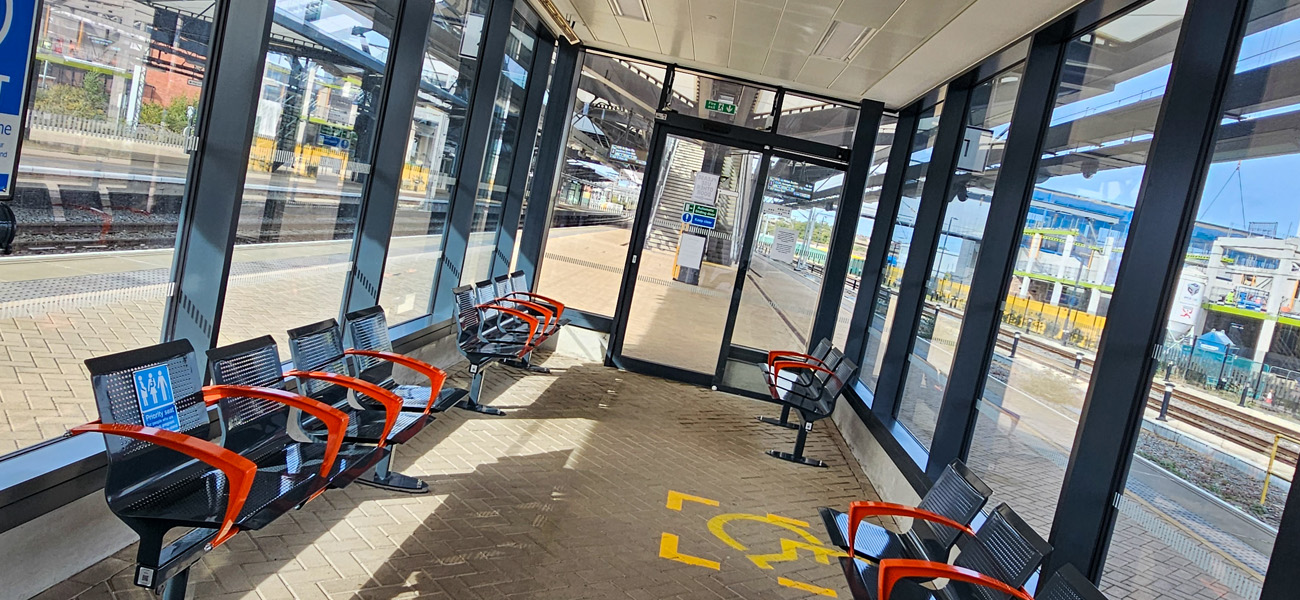
A final thought for facade contractors
The construction industry has spent years trying to optimise labour cost.
Perhaps the next step is to optimise labour
resilience.
Because when programmes move, projects
accelerate, regions become labour-short or holiday periods arrive, the
organisation with the most flexible workforce may not necessarily have the
cheapest labour.
It may simply have the ability to keep moving.